



Another Private Letter Ruling Approves NING Trust
By William D. Lipkind, J.D., LL.M. (Taxation) & Steven J. Oshins, Esq., AEP (Distinguished) | Volume 2, Issue 5 (May 2014)
Taxpayers in high-income tax jurisdictions with large unrealized capital gains or a regular stream of ordinary income from an investment portfolio have always wanted to find a way to eliminate or minimize their state income tax exposure without giving up the economic benefit of the underlying assets. On March 8, 2013, the IRS issued PLRs 20131002 through 20131006 approving such a trust under Nevada law. These landmark Rulings have opened the doors for many practitioners to take advantage of this unique opportunity for their clients who live in high state income tax jurisdictions.
Those clients who either have a low-basis asset to sell or have a sizable portfolio of assets that would not be considered source income in their high state income tax jurisdiction now have the means to save significant state income taxes using this novel strategy. Since the issuance of those Private Letter Rulings, the so-called NING Trust has become one of the most popular income tax strategies. “NING Trust” is the term that is generally used for the Nevada Incomplete Gift Non-Grantor Trust.
A NING Trust is an irrevocable trust that the settlor sets up for the benefit of himself and other discretionary beneficiaries. Transfers to the trust are not completed gifts for gift tax purposes, yet the trust itself is the owner of the assets for income tax purposes. Because the trust pays the income taxes, a settlor who lives in a high state income tax jurisdiction can transfer assets to the trust,and the trustee can sell the assets without any state income tax liability.
On March 7, 2014, the IRS issued Private Letter Rulings 201410001 through 201410010, all relating to the same NING Trust granting approval. The trust approved in this series of Rulings was very similar to the trust approved in the 2013 Rulings, except that, for the first time, the IRS approved a separate guardian being named to exercise the rights of minor beneficiaries who were named on the distribution committee. In a NING Trust, there must be a distribution committee made up of “adverse” parties (i.e., some of the discretionary beneficiaries) to make discretionary distributions in order to avoid the trust being a grantor trust for income tax purposes.
In order to create a non-grantor trust with the settlor as a beneficiary, the trust must be established under the laws of a domestic asset protection trust jurisdiction. Of the domestic asset protection jurisdictions, Nevada has become the primary jurisdiction for this technique (although the laws of Alaska and Delaware will also accommodate the strategy), especially given that the both series of Private Letter Rulings have been based on trusts established under Nevada law. This technique has now become a necessity in any advisor’s arsenal of strategies.
ABOUT THE AUTHORS
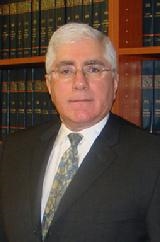
William D. Lipkind, Esq. of Lampf, Lipkind, Prupis & Petigrow, P.A. in West Orange, New Jersey and New York, New York and specializes in the area of taxation and estate planning. Mr. Lipkind was admitted to the New Jersey bar in 1967 and was admitted to the U.S. Tax Court in 1971. He served as the Law Secretary to Justice Nathan Jacobs, Supreme Court of New Jersey, 1967-1968. He drafted the NING Trust and applied for and obtained PLR 20131002 in March 2013 approving the NING Trust. Mr. Lipkind can be reached at 973-325-2100 or at [email protected].
Steven J. Oshins, AEP (Distinguished) is a member of the Law Offices of Oshins & Associates, LLC in Las Vegas, Nevada. He was inducted into the NAEPC Estate Planning Hall of Fame® in 2011. He was named one of the 24 “Elite Estate Planning Attorneys” and the “Top Estate Planning Attorney of 2018” by The Wealth Advisor and one of the Top 100 Attorneys in Worth. He is listed in The Best Lawyers in America® which also named him Las Vegas Trusts and Estates/Tax Law Lawyer of the Year in 2012, 2015, 2016, 2018, 2020, 2022, 2024 and 2026. He can be reached at 702-341-6000, ext. 2 or [email protected]. His law firm’s website is www.oshins.com.