


Stacking QSBS Exemptions Through Multiple Non-Grantor Trusts

By Steven J. Oshins, Esq., AEP (Distinguished)
I. Introduction
For founders, earlystage investors, and families holding concentrated equity positions, the Qualified Small Business Stock (QSBS) exclusion under IRC §1202 remains one of the most powerful tax incentives in the Internal Revenue Code. Properly structured, it eliminates federal capital gains tax on the sale of qualifying stock, a benefit that can dwarf every other planning technique available to entrepreneurs.
But the real leverage comes from multiplying the exemption. For more than a decade, sophisticated planners have used multiple non-grantor trusts to “stack” QSBS exclusions across family members and independent taxpayers.
The 2025 tax law changes expanded the pertaxpayer exclusion from $10 million to $15 million, dramatically increasing the value of multitrust planning. Families who previously could shelter $20 to $40 million can now shelter $30 to $60 million or more.
This article walks through:
- The old rules: $10 million per taxpayer under §1202
- The new 2025 rules: $15 million per taxpayer
- Why non-grantor trusts qualify as separate taxpayers
- The mechanics of stacking exemptions
- A $40 million example involving a husband, wife, and three children
II. The Original QSBS Framework: $10 Million Per Taxpayer
Under the longstanding version of §1202, each taxpayer could exclude the greater of $10 million of gain, or 10 times basis. For most founders with nearzero basis, the $10 million cap was the operative limit.
For stacking purposes to multiply the number of exemptions, each separate non-grantor trust is its own taxpayer. That means each trust gets its own $10 million exclusion, separate from the grantor, the beneficiaries and other trusts.
The IRS has never issued regulations prohibiting the use of multiple non-grantor trusts to multiply QSBS exclusions. The Service has occasionally challenged abusive trusts lacking economic substance, but properly drafted, separately funded trusts have consistently been respected.
III. The 2025 Expansion to $15 Million Per Taxpayer
The 2025 tax legislation increased the §1202 exclusion from $10 million to $15 million per taxpayer. The 10 times basis alternative remains, but for most founders the $15 million cap is the operative limit.
Because the statute still treats each non-grantor trust as a separate taxpayer, the 2025 expansion amplifies the value of multitrust planning. The same structure that previously sheltered $40 million, for example, can now shelter $60 million or more.
IV. Why separate trusts matter
A single trust with multiple beneficiaries receives one exclusion. Three separate trusts receive three exclusions. It’s that simple.
To work, each trust must have a different beneficiary.
V. A $40 Million Example: Husband and Wife with Three Children
Let’s assume we’re still in the $10 million regime (which we are now). A husband and wife own $40 million of QSBS in a qualifying C-corporation. Their basis is negligible. They want to maximize the §1202 exclusion while maintaining longterm family control.
They create:
- Trust 1: Non-grantor trust for Child A
- Trust 2: Non-grantor trust for Child B
- Trust 3: Non-grantor trust for Child C
The couple transfers:
- $10 million of QSBS to Trust 1
- $10 million of QSBS to Trust 2
- $10 million of QSBS to Trust 3
- They retain $10 million personally
The family sells all $40 million of QSBS.
Because each taxpayer only has $10 million of gain allocated to them, each exclusion fully shelters their portion.
VIII. Conclusion
The 2025 expansion of the QSBS exclusion from $10 million to $15 million per taxpayer dramatically increases the value of stacking.
In the example above, a family with $40 million of QSBS eliminates 100% of federal capital gains tax through a straightforward, wellestablished technique: using multiple non-grantor trusts, each treated as a separate taxpayer, and each entitled to its own §1202 exclusion.
ABOUT THE AUTHOR
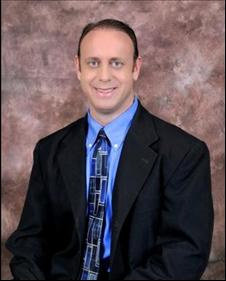
Steven J. Oshins, AEP (Distinguished) is a member of the Law Offices of Oshins & Associates, LLC in Las Vegas, Nevada. He was inducted into the NAEPC Estate Planning Hall of Fame® in 2011. He was named one of the 24 “Elite Estate Planning Attorneys” and the “Top Estate Planning Attorney of 2018” by The Wealth Advisor and one of the Top 100 Attorneys in Worth. He is listed in The Best Lawyers in America® which also named him Las Vegas Trusts and Estates/Tax Law Lawyer of the Year in 2012, 2015, 2016, 2018, 2020, 2022, 2024 and 2026. He can be reached at 702-341-6000, ext. 2 or [email protected]. His law firm’s website is www.oshins.com