


Stop Cutting Corners: Why “Efficient” Lawyers Are Setting Themselves Up for Lawsuits!

In today’s world, I see far too many estate planning attorneys racing to the holy grail of efficiency. Everyone seems to be looking for timesaving, non-attorney shortcuts to boost profits: “Why not have a paralegal handle the document signing?” “Why waste an attorney’s billable time at the execution meeting?”
I’ll tell you why. Because nothing could be more important than the moment your client signs their estate planning documents. And nothing could be more dangerous than the trend of attorneys abdicating their role and responsibility.
The Contrarian View: Why You Should Never Skip the Execution Meeting
While the industry whispers “delegate,” I should out the opposite: show up.
At my law firm, the attorneys attend every single signing meeting. Not because that’s the way I did it for years, and I’m old-fashioned. Not because I’m inefficient. But because I’ve seen firsthand how this practice protects my clients, their estates, and yes — my firm. (And, as you’ll see, it drives more revenue into the firm, so it’s well worth my time.)
When the attorney is in that room with the client, they’re ensuring three critical things:
- Understanding: Clients deserve to know exactly what they are signing. This isn’t a stack of boilerplate paperwork — these are binding legal documents customized for them that will determine the future of their assets and loved ones.
- Capacity and Undue Influence: I can look my client in the eye and confirm they understand, that they are of sound mind, and that no one is pressuring them. That record in my file alone has saved countless estates from costly, heartbreaking litigation.
- Avoiding Unauthorized Practice of Law: Handing off this responsibility to a paralegal or notary risks crossing ethical lines. What exactly did they say at the meeting? It opens the door to malpractice. I don’t take that risk, and neither should you.
This isn’t just theory. I’ve literally walked away from potential lawsuits because of the meticulous way we handle signings, going through the same process every time and documenting it in our files. In over four decades of practice, my firm has never lost a case tied to estate planning documents that our law firm has prepared (Oh, yeah, we did settle 2 cases — in over 15,000 estate plans.) That’s no accident. It’s process.
Better Protection = Better Service
Let me be blunt: attending execution meetings is not only about legal protection. It’s about providing better service.
Clients aren’t hiring us because we’re the cheapest option. They’re hiring us because they want peace of mind. And peace of mind comes from knowing their attorney — not an assistant, not a notary — is by their side at the most critical moment of the planning process.
In a world where “cheap-legal” is winning clients on price, real attorneys need to win on value. That means demonstrating the depth of our service. Showing clients they matter. That we are willing to spend time on them personally, even in an age of “internet speed” and “efficiency.”
Because let’s be honest: what good is efficiency if it leaves your clients vulnerable to lawsuits, family disputes, or invalid documents?
Better Service Opens Revenue Opportunities
When the attorney finished up the signing — and has an assistant make copies and assemble a take-home package for the clients — the attorney has several great opportunities (or “asks”) at the time the clients are at their pinnacle of happiness and open to saying “Yes!”
Here are a few of the asks (or “suggestions”):
- Referrals to friends, relatives, neighbors, and coworkers (made as easy as just handing them or emailing a seminar flyer!)
- Five-star Google Review (which can be done right there, using a QR code)
- Referrals to groups, clubs, or civic organizations (to present a seminar, introduced by your happy client-member)
These simple steps—done by the attorney who has built trust and rapport and has the most persuasive authority—do add up. My firm actually generates 5-10 new initial paying clients a month — just from this simple process.
The Bottom Line
In my career, I’ve built a reputation for estate plans that actually work. Not because I’ve found magical language or reinvented the wheel — but because I refuse to cut corners at the most important stage of the process.
If you want to protect your clients, protect your firm, and elevate the value of what you do, attend every execution meeting or at least part of it and have an associate attorney do the rest, but only if they produce results from “the asks.”.
It’s not old school. It’s not inefficient. It’s the highest level of client service. And in this age of “cheap-legal” competitors, it’s exactly how you set yourself apart and prove your worth.
ABOUT THE AUTHOR
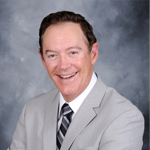
Attorney Philip J. Kavesh is the principal of one of the largest estate planning firms in California—Kavesh, Minor and Otis—which has been in business since 1981. He is also the President of The Ultimate Estate Planner, Inc., which provides a variety of training, marketing, and practice-building products and services for estate planning professionals.